
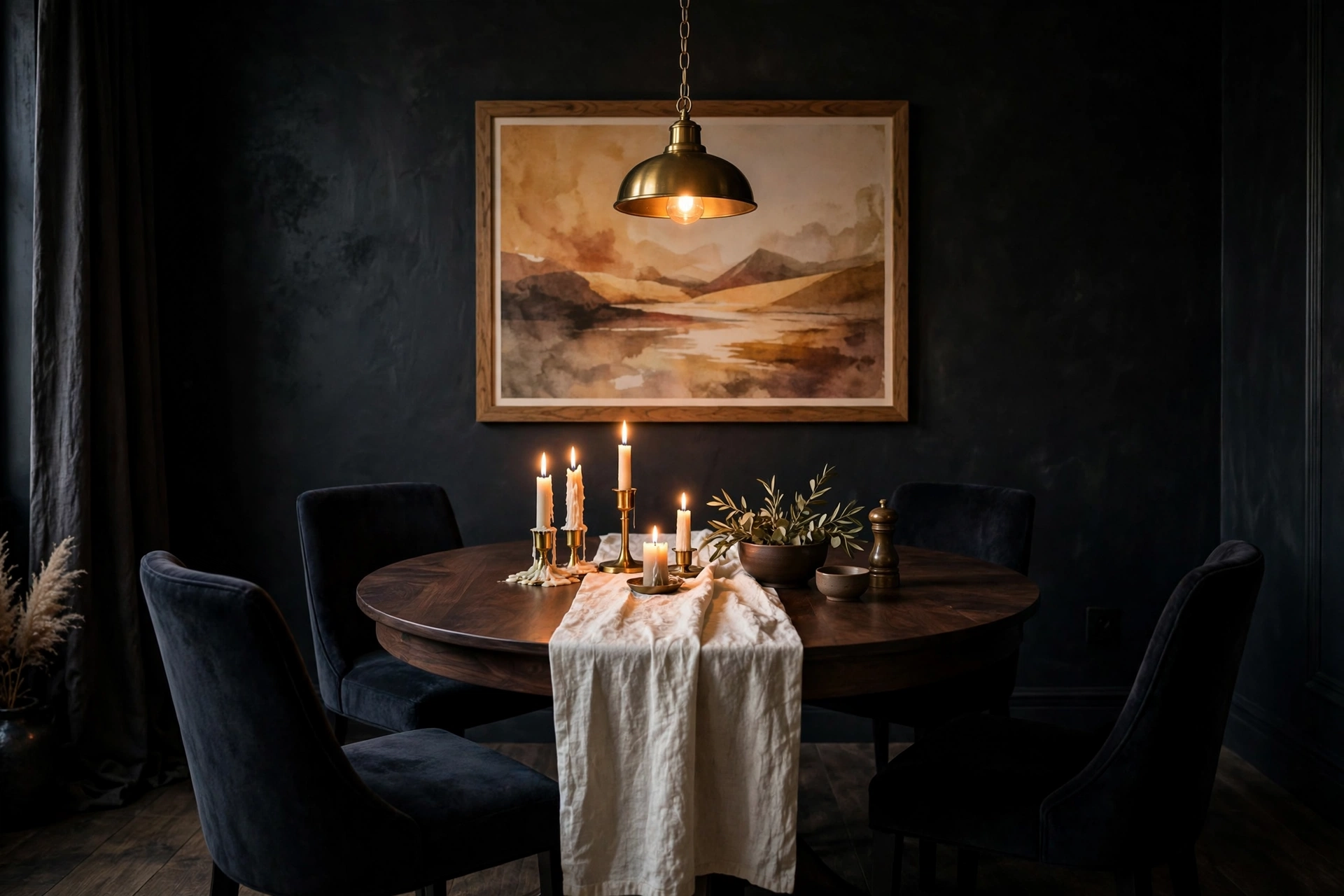
A dark dining room in a small home sounds like a dare. Dining rooms are supposed to be bright and airy, and a small one already feels tight. But a moody dining room is one of the oldest tricks in interior design: deep walls, low warm light, and a table that glows in the middle of it all. The room stops being a cramped corner and becomes the most atmospheric place in the home — the spot where every dinner feels like an occasion.
This guide shows how to build a dark dining room that fits a small space: a warm dark palette, a table sized for the room, low lighting that flatters everyone, and renter-friendly ways to get the look without repainting the whole home.
1. Why a moody dining room feels intimate, not small
Dark walls pull a room inward, and in a dining room that is exactly what you want. A meal is an intimate thing: people leaning in, talking across a table, candlelight on faces. A pale dining room scatters the attention to the corners. A dark one gathers it at the table, which is where it belongs. The room feels smaller on a floor plan and larger in feeling, because the space you actually use is the space that glows.
A dark dining room also forgives a small table. In a bright room, a tiny table looks lost. In a dark room with a pendant hanging low over it, the same table becomes the centre of the world. The darkness hides the tight walkways and the too-close wall, and the light makes the table look generous. You are designing a stage, not a ballroom.
2. The palette: charcoal, deep green, and warm wood
The best dark dining palette starts with one deep wall colour and one warm wood. Charcoal with a warm undertone, deep forest green, or a dark plum-brown all work, because they sit beautifully next to wood. A round walnut table, dark wood chairs, and brass details give the room its warmth; the dark walls give it its drama.
Keep the ceiling light if the room is small — a soft warm white overhead keeps the room from feeling like a box. The walls go dark, the ceiling stays pale, and the floor stays mid-tone wood. That sandwich — pale top, dark middle, warm floor — is what keeps a moody dining room feeling balanced. Add cream linen and soft candlelight, and the palette is complete.
3. The table: round, dark, and sized for the room
In a small dark dining room, a round table is almost always the right call. There are no corners to bump into in the dark, everyone can see everyone else, and a round table needs less floor space than a rectangular one for the same number of seats. A 36 to 42 inch round table seats four comfortably in a small room.
Choose a dark wood top — walnut, espresso-stained oak, or a dark veneer — so the table reads as part of the moody palette rather than a pale island in it. A pedestal base is better than four legs in a tight room, because chairs tuck in cleanly and no one trips over a leg. If you need extra seats sometimes, keep two folding chairs in a closet rather than crowding the table every day.
4. Lighting: one low pendant and candlelight
Lighting makes or breaks a dark dining room. One pendant hung low over the table — 30 to 36 inches above the tabletop — creates a pool of warm light exactly where the food and faces are. A drum shade in dark linen, a brass dome, or a smoked glass globe all work; what matters is that the light points down and stays warm.
Candles do the rest. Two candlesticks on the table, or a small cluster of votives, add the flicker that makes a dark room feel alive. Battery candles work fine if open flames worry you, and they let you leave the table set without a second thought. Skip the bright overhead light entirely when you eat — in a dark dining room, the ceiling light is for cleaning up, not for dinner.
5. Chairs that invite long dinners
Dark dining chairs should be comfortable enough for a long meal and slim enough for a small room. Upholstered seats in a deep colour — charcoal velvet, dark green linen, or oxblood leather — are kind to sit on and add to the moody palette. Wooden chairs with a dark stain and a thin cushion work too, and they tuck in tighter.
Mixing chairs is a good trick in a small dark room: two upholstered chairs at the ends and simple wood chairs on the sides, or a small bench on one side that slides under the table when it is not needed. Keep the chair backs low and open if you can — a tall solid chair back blocks the light and makes the room feel fenced in. A chair you can see through is a chair that lets the room breathe.
6. Walls and art: one dark wall, warm pictures
You do not need all four walls dark. One dark accent wall behind the table, or dark wainscoting on the lower half of the walls with a pale upper half, gives you the mood while keeping the room from feeling closed in. If you rent, removable wallpaper in a deep botanical or damask print on one wall does the same job and peels off when you move.
Art in a dark dining room should be warm: a landscape with golden light, a still life in amber tones, or a simple framed print in brass. Hang one large piece rather than a gallery of small ones — a single warm image against a dark wall is the focal point the room needs. A large mirror in a dark frame works too, bouncing the candlelight back across the table.
7. The table setting: linen, wood, and candlelight
A dark dining table looks best dressed simply. A cream or natural linen runner down the middle, dark wood chargers or plain ceramic plates, and cloth napkins in a warm tone are all the dressing the table needs. The contrast between the pale linen and the dark table is what makes the setting glow under the pendant.
Keep the centrepiece low and simple: a wooden bowl of fruit, a small vase with eucalyptus, or a trio of candlesticks. Nothing tall — a tall centrepiece blocks the view across a small table and casts strange shadows in low light. Set the table even when you are eating alone. A dark dining room rewards the ritual, and a set table is what turns a weeknight meal into a small occasion.
Dark dining room checklist
- Pick one deep wall colour: charcoal, forest green, or dark plum-brown.
- Keep the ceiling pale and the floor warm wood.
- Choose a round table, 36 to 42 inches, with a pedestal base.
- Hang one pendant low over the table, 30 to 36 inches above it.
- Use warm bulbs and candles — no bright overhead light at dinner.
- Pick slim, comfortable chairs; a bench on one side saves space.
- Go dark on one wall, or use removable wallpaper if you rent.
- Hang one large warm art piece or a mirror in a dark frame.
- Dress the table simply: linen runner, dark wood, cloth napkins.
- Keep the centrepiece low so everyone can see across the table.