
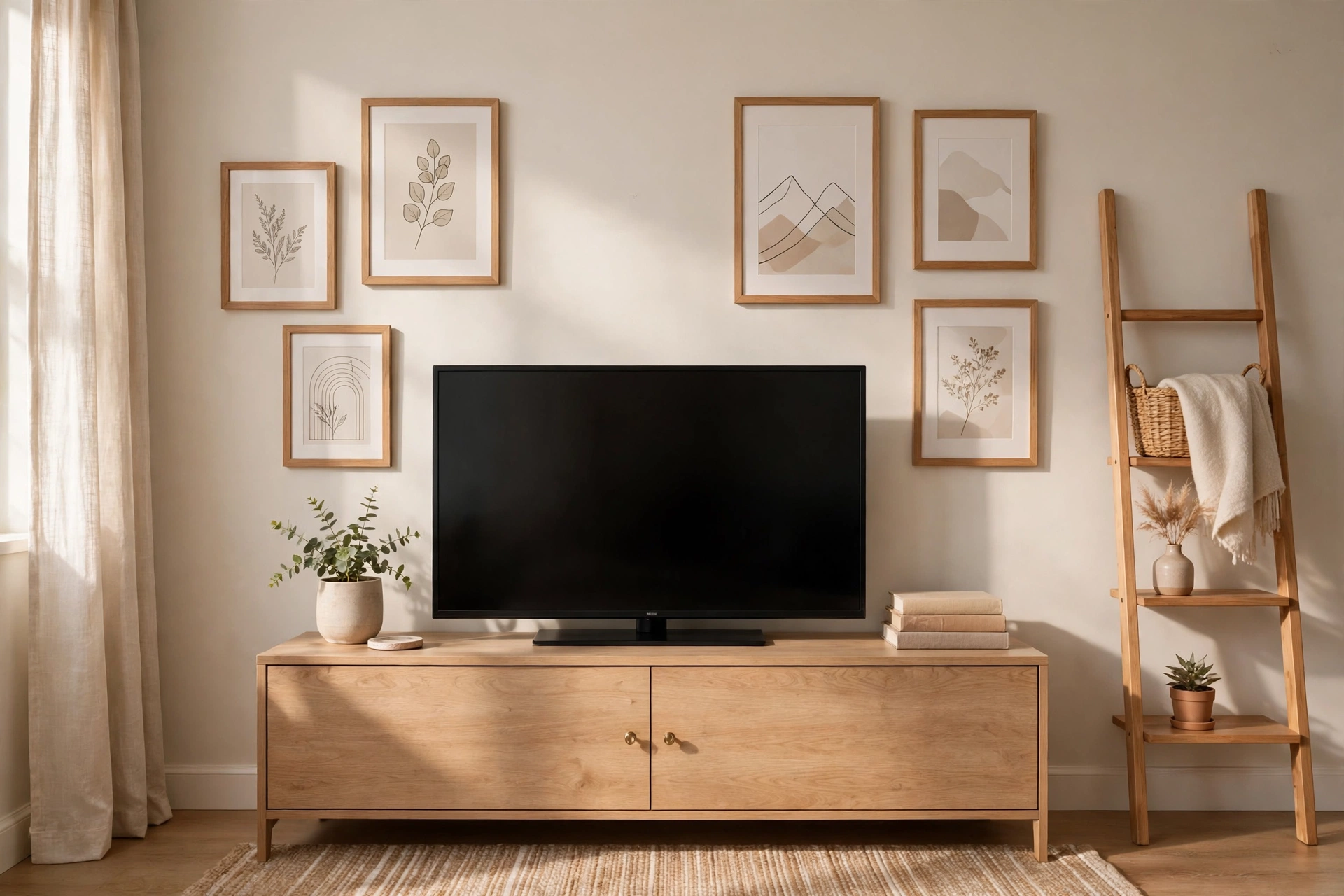
In most small living rooms, the TV wall is the wall you look at most — and the one that gets the least thought. The TV goes up wherever the cable outlet is, the cords dangle, and the console becomes a shelf for everything without a home. It does not have to be that way. A small TV wall can look deliberate and calm, even in a rental where you cannot drill a single hole.
These seven ideas work for USA apartments and small homes, and every one of them is renter-friendly: no drilling, no damage, and nothing you cannot take with you when you move. The goal is simple — make the TV look like it belongs to the room, instead of looking like it landed there.
1. Let a low console carry the TV
The easiest renter-friendly TV wall starts with the furniture, not the wall. A low, wide media console holds the TV at the right height and gives you closed storage for everything that usually ends up on top of it. Choose a console that is wider than the TV by a few inches on each side, so the screen never overhangs the edges.
Keep the console low. A TV that sits too high strains your neck and makes the whole wall feel top-heavy. When you sit on the sofa, the middle of the screen should sit roughly at eye level. If your console is too tall, a lower one will change the room more than any decoration on the wall.
2. Hide the cords without opening the wall
Cords are what make a TV wall look unfinished. You do not need to open the wall to hide them. A paintable cord cover runs down from the TV to the console and blends into the wall, and it peels off cleanly when you move. Route the cords behind the console where they cannot be seen from the sofa.
Group the plugs on one power strip inside the console, and use small adhesive cord clips to keep the run tidy behind the furniture. Leave a little slack in each cord so nothing pulls tight, and label the strip once so you never have to crawl behind the console to find the right plug. A wall with no visible cords looks finished even before you add anything else to it.
3. Frame the TV like a piece of art
A bare TV on a bare wall reads as a black rectangle. A TV with a frame around it reads as part of the room. Hang a few framed prints around the screen — not above it, where they compete with it, but beside it and below it — so the TV becomes one piece in a small gallery instead of the only thing on the wall.
Use frames in one finish, all the same colour, and keep the art calm: landscapes, simple line drawings, or soft abstract prints. Match the frame colour to the console, and the whole wall ties together. When the TV is off, the frames keep the wall interesting; when it is on, they stop the screen from dominating the room.
4. Flank it with shelves that lean, not hang
Floating shelves need screws, but a TV wall does not need floating shelves. A leaning ladder shelf on one side of the console gives you the same layered look with nothing fixed to the wall. Style it lightly — a few books, one plant, one framed photo — and leave some shelves half empty so it reads as decor, not storage.
If you have room on both sides, use a matching pair: a tall plant on one side and the ladder shelf on the other, or two slim bookcases in the same finish. The symmetry makes the TV feel centred and intentional, and everything stays freestanding, so moving day is simple.
5. Balance both sides so the wall feels finished
A TV wall looks unfinished when one side is heavy and the other is empty. Stand back and check the balance: the console, the TV, and whatever sits on each side should feel roughly equal in weight, even if the objects are different. A tall plant on the left balances a stack of books and a lamp on the right.
Keep the tallest object near the TV, not at the far edge of the wall. Height near the centre pulls the eye inward and makes the wall feel composed; height at the edges pulls the eye outward and makes the room feel scattered. Small rooms need that inward pull more than large ones do.
6. Make the TV disappear when it is off
A black screen is the darkest thing in most living rooms, and in a small room it draws the eye even when it is off. Soften it with contrast: a warm wood console, a woven basket beside it, a soft rug in front of it. Warm textures around a dark screen make the screen feel smaller.
For a stronger effect, put a dark panel behind the TV — a large framed canvas, a woven wall hanging, or a piece of removable wallpaper in a deep tone on just that section of wall. The screen blends into the dark background instead of floating on a pale wall, and the wall looks styled whether the TV is on or off.
7. Style the console top in threes
The top of the console is where TV walls go wrong: remotes, chargers, mail, and a plant that has seen better days. Clear it completely, then put back just three groups — a small lamp, a stack of two or three books, and a plant or a vase. Three groups are enough to make the console look styled, and few enough that the TV stays the focus.
Give the remotes a home inside the console or in a small basket on one end, so they are easy to reach and invisible the rest of the time. A console top with breathing room makes the whole wall feel calm, and it takes less than ten minutes to keep that way once the habit is set.
Small living room TV wall checklist
Start with: a low console wider than the TV, cords hidden in a cover or behind the console, frames in one finish around the screen, and balanced height on both sides. Skip: a TV mounted too high, cords hanging down the wall, a console top crowded with small objects, and shelves that are packed full. Stand on the sofa side of the room when you are done — if the TV looks like one calm piece of a finished wall instead of a black rectangle on its own, the wall is doing its job.